What questions do seed investors ask fintech founders in the UK?
A step-by-step guide: the 50 questions to expect, an example answer for each, and how to check your deck with AI.
Key takeaways
As of 20 November 2026, UK seed investors mostly ask fintech founders about the risks, the round and how long the cash lasts.
- Expect close questions on safeguarding, so show where customer money sits and how often you check the balances match.
- Bring complaint figures by month, including any cases at the Financial Ombudsman, and show how you treat vulnerable customers.
- Prepare clear answers on scam refunds, money laundering checks and how fast you recover when your service goes down.
- Have your EIS advance assurance, R&D tax relief claims and contribution profit per customer ready to share.
Why prepare for these questions?
Every investor asks in their own way, and most ask far more than your deck answers. A slow or vague reply to a simple question, like how long your cash lasts, can stall a conversation that was going well.
The good news: the questions are predictable. Prepare once, with a number, a date and a short answer for each, and every meeting after that gets easier. This guide takes you through it in five steps.
Step 1
Learn the 50 questions seed investors ask fintech founders in the UK
They fall into 8 themes, starting with what investors ask about most at this stage. Open any question to see what to show and an example answer.
The example answers are made up, to show what a clear answer sounds like.
What do investors ask about risks at seed?
They want to know what could go wrong and what you are doing about it.
How do you keep customer money safe if your company fails?
FintechWhat to show: Show where customer money sits, how it is kept apart from yours, and how often you check that the balances match.
Example answer: Customer money sits in a safeguarding account at a UK bank, kept apart from ours. We reconcile the balances every working day and have an outside audit each year.
Source: FCA: Safeguarding requirements for payment institutions and e-money institutions
If a customer is tricked into sending money, what does it cost you?
FintechWhat to show: UK payment firms face rules on paying back victims of push payment scams. Show cases by month, money paid back and your warnings.
Example answer: Last quarter, 14 customers reported scams and we paid back £9,800 in total. Since we added a warning screen for new payees in August, cases have halved.
How do you check your customers and stop money laundering as you grow?
FintechWhat to show: Show your customer checks, who runs them, and how many cases you flag. Say how the work grows as customers grow.
Example answer: Every customer goes through identity and sanctions checks at sign-up. Our two-person financial crime team reviews about 30 flagged cases a month, and most checks run automatically.
If your service goes down, how fast can you bring it back?
FintechWhat to show: Name the services customers cannot do without. Show how long they may be down before harm, and what your last test found.
Example answer: Payments and balances are the services customers cannot do without, and four hours is our limit. Our September test restored payments in 70 minutes and found one slow alert.
Source: FCA: Operational resilience
How many complaints have reached the Financial Ombudsman?
FintechWhat to show: Show complaints by month, how many you settle yourself, and any that went to the Ombudsman. Say what you changed after each.
Example answer: Two complaints have reached the Financial Ombudsman this year. We settle about 95% ourselves, and after each case we rewrote the letter that caused the confusion.
If you sell insurance, are you authorised as an intermediary or acting for someone else?
FintechWhat to show: Say whether you hold your own FCA permission or sell under another firm. Show which insurers you place cover with.
Example answer: We hold no insurance permission of our own. We sell device cover as an appointed representative of an authorised broker, which places it with two UK insurers.
Source: FCA: Apply to become a general insurance intermediary
What is the biggest thing that could stop this working?
What to show: Show the one risk you worry about most and what you are doing about it.
Example answer: Our biggest risk is that buyers like it but never make it a habit. So we track weekly use per account and call anyone who goes quiet for a week.
What have you tried that did not work?
What to show: Show a test that failed and what you changed after it. It could be a channel, a price, a feature or a type of customer.
Example answer: We ran paid social ads for three months and won 4 customers, at far above our target cost. We stopped and moved that budget into a referral offer.
Who do you compete with, and where do you beat them?
What to show: Show your main rivals, including the old way of doing it. Say the one thing you do better, and why it is hard to copy.
Example answer: Most buyers still use a spreadsheet, and two older tools sell to larger firms. We set up in one afternoon, thanks to links with 30 common tools that took two years to build.
Are there any rules or laws that affect you?
What to show: Show the rules that apply to you and where you stand with each. It could be data protection, a licence, or rules for your industry.
Example answer: Data protection law applies, because we hold our customers' contact details. We have a privacy policy and a data processing agreement with each customer. Our work needs no licence.
What do you depend on that you do not control?
What to show: Show what you depend on, such as a supplier, a platform or an app store. Say what you would do if it changed.
Example answer: We depend on one cloud host and on two accounting tools letting us connect. We could move hosts in about a month, and we already support three other accounting tools.
Tip: Every investor asks about risk in their own words. Rather than answering the same email ten times, write your answer once in immut and let each investor's AI ask it their way.
What do investors ask about the round at seed?
They want to know how much, on what terms, and what it pays for.
Will this round qualify for EIS for your UK investors?
FintechWhat to show: Show your advance assurance, or say when you will apply. Have your business plan and forecasts ready, as HMRC asks for them.
Example answer: Yes. HMRC gave us EIS advance assurance in August, based on our business plan and three-year forecasts.
Will your seed shares qualify for EIS, and are you a knowledge-intensive company?
UKWhat to show: EIS has rules on your age, size and trade. Firms doing a lot of research and development may count as knowledge-intensive and get different limits. Say which rules apply to you.
Example answer: We expect them to qualify: we are three years old with 14 staff. Over a third of our spend is research and development, so we may count as knowledge-intensive. Our accountant is checking.
Source: GOV.UK: Apply to use the Enterprise Investment Scheme to raise money for your company
What tax relief will your investors get?
UKWhat to show: Investors in SEIS and EIS shares can get income tax relief and other reliefs if the rules are met. Knowing this helps you explain the deal to UK angels.
Example answer: Our round has SEIS and EIS advance assurance. If the rules are met and they hold for three years, SEIS investors can claim 50% income tax relief and EIS investors 30%.
Source: GOV.UK: Tax relief for investors using venture capital schemes
How much are you raising, and on what terms?
What to show: Show the amount, the type of round and the terms. It could be a priced round with a valuation, a SAFE with a cap, or an advance subscription agreement (ASA). In the UK, say if the round qualifies for SEIS or EIS.
Example answer: We are raising 750,000 on a convertible agreement with an 8 million valuation cap and no discount. We plan to close by 31 January.
What will the money pay for?
What to show: Show spend by area as a share of the round. It could be hiring, product, sales and marketing, and a buffer.
Example answer: About 55% goes on hiring two engineers and a salesperson. Sales and marketing take 20%, product and tools take 10%, and we keep 15% as a buffer.
What will you have achieved when it runs out?
What to show: Show the milestones the money gets you to, so your next round makes sense. It could be a revenue level, a number of customers or a launch.
Example answer: In 18 months we aim to reach 100,000 a month in recurring revenue and about 400 customers. That sets up our next round on real growth.
Who else is investing, and is there a lead?
What to show: Show who has committed so far and how much. Say if there is a lead investor who sets the terms.
Example answer: We have 520,000 committed from 11 angels and one fund. The fund leads with 300,000 and set the terms.
What happened with any money you raised before?
What to show: Show what you raised before, who it came from, and what it paid for.
Example answer: We raised 250,000 from angels in early 2025. It paid for our first two hires and the product we launched last spring, and 70,000 of it is left.
Tip: No two investors frame the round the same way. With immut, they ask their own question and get your answer, instead of searching a deck.
What do investors ask about cash at seed?
They want to know how much you have, how fast it goes, and when you run out.
Do you claim R&D tax relief on the work you do to build the product?
FintechWhat to show: Say which projects you claim for and what they tried to solve. Show past claims and how they changed your cash.
Example answer: We claim R&D tax relief for our fraud scoring model and our payment matching engine. Last year's claim returned £64,000, which added about two months of runway.
Do you claim R&D tax relief?
UKWhat to show: Companies working on science or technology projects may be able to claim R&D tax relief. Investors ask whether you claim it and how it fits your cash plan.
Example answer: Yes. We claimed R&D tax relief for last year and received £38,000 in March. We expect a similar claim next year but leave it out of our runway.
Source: GOV.UK: Check if you can claim Research and Development (R&D) tax relief
How much cash do you have in the bank?
What to show: Show the cash in your bank today and the date of the figure.
Example answer: We had 412,000 in the bank on 1 November, taken from our bank statement that day.
How much do you spend each month?
What to show: Show what you spend each month after any revenue comes in, for each of the last few months.
Example answer: After revenue, we spent 38,000 in August, 41,000 in September and 39,500 in October. Most of the rise came from one new hire.
How many months does your cash last?
What to show: Show your cash divided by your monthly spend after revenue, as a number of months. Say what would change it, such as a new hire or a big contract.
Example answer: About 10 months: 412,000 divided by roughly 40,000 a month. A planned engineering hire in January would cut that to about nine months.
What are your biggest costs?
What to show: Show your top few costs and the share of spend each takes. For most startups that is people first, then tools and marketing.
Example answer: People take 68% of spend, across five salaries. Software and hosting take 14%, and marketing takes 11%.
When will you need to raise again?
What to show: Show the date you plan to raise next and what you will have reached by then. It could be a revenue level, a number of customers or a launch.
Example answer: We plan to raise next in September 2027. By then we aim to reach 60,000 a month in recurring revenue and about 300 customers.
Tip: Every investor asks about cash, and a deck is out of date the day you send it. With immut, they ask and the answer comes from Xero as it stands today.
What do investors ask about traction at seed?
They want to see who uses it today and how fast that is growing.
How do you show customers get good outcomes under the Consumer Duty?
FintechWhat to show: Show complaints, how fast you fix them, and how you treat customers who may be vulnerable. Use real figures by month.
Example answer: Complaints fell from 41 in June to 19 in October. We close 90% within five days, and customers who may be vulnerable get a named caseworker.
Source: FCA: Consumer Duty
How many customers do you have today?
What to show: Show one customer number and the date it is from. Say what counts as a customer: paying accounts, signed contracts or active pilots.
Example answer: As of 31 October we have 42 paying accounts. We count a customer as an account with a paid invoice, so our 6 pilots are not included.
How many people use it each week?
What to show: Show your best usage number. It could be weekly active users, returning users, app downloads, or monthly visits to your website. Say how you define active.
Example answer: About 1,150 people used it last week. We count someone as active if they finish at least one task, not just log in.
How fast is that growing, month to month?
What to show: Show growth month by month for at least the last six months, so the trend is clear. It could be revenue, customers, users or downloads.
Example answer: Revenue grew from 8,200 in May to 19,400 in October. That is about 19% a month on average, with one flat month in August.
How do most new customers find you?
What to show: Show your main channel and its share of new customers. It could be referrals, search, outbound sales, partners or paid ads. Add what each new customer cost.
Example answer: Referrals bring about 55% of new customers, mostly from existing users, and search brings 30%. A referred customer costs about 120 to win, against 450 from paid ads.
What is in the sales pipeline right now?
What to show: Show deals by stage and their size. It could be trials, pilots, signed letters of intent, or contracts with lawyers. Say how many usually close.
Example answer: We have 14 deals open: 6 in trial, 5 in pilot and 3 with signed letters of intent. Together they are worth about 210,000 a year. About 4 in 10 trials close.
Tip: Traction changes every week, and a deck freezes it. With immut, an investor asks and the answer comes from the tools you already run, as they stand today.
What do investors ask about the team at seed?
They want to know why this team, who does what, and who is missing.
How will you give staff a share of the company?
UKWhat to show: EMI options let qualifying UK companies give staff share options with better tax treatment. Investors ask how big the pool is and whether options have been granted properly.
Example answer: Through an EMI option pool of 10% after this round. Two early staff already hold options, each granted with an HMRC-agreed valuation and notified on time.
Source: GOV.UK: Tax and Employee Share Schemes: Enterprise Management Incentives (EMI)
What have the founders done before that fits this problem?
What to show: Show what each founder did before that gives them an edge here. It could be years in the industry, a past startup, or deep skill in the product.
Example answer: I spent eight years running operations for firms like the ones we sell to. My cofounder built and sold a small software company, then led product teams.
How are roles split, and which gap is the biggest?
What to show: Show who owns product, sales and money today. Name the one hire that matters most and why.
Example answer: I own sales and money, and my cofounder owns product. Our biggest gap is a senior engineer, because she still writes most of the code herself.
How much time is each founder giving it?
What to show: Show whether each founder works on it full time. If not, give the date they will.
Example answer: Both of us have worked on it full time since March. Our third cofounder joins full time on 1 February, when her notice period ends.
Who will you hire with this money?
What to show: Show the roles you will hire, in order, and why each one comes first.
Example answer: First, a senior engineer, so product work stops waiting on one person. Then a salesperson to follow up inbound leads, and a support lead once we pass 150 customers.
How do you split ownership between founders?
What to show: Show the ownership split between founders and whether shares vest over time.
Example answer: The two founders split it 50/50. Shares vest over four years with a one-year cliff, so anyone who leaves early keeps only what has vested.
Tip: Investors ask about the team in a hundred ways. With immut, you write your story once and each investor's AI asks about the part they care about.
What do investors ask about your market at seed?
They want to know who pays, how many of them there are, and why now.
Who pays for this, and what problem does it fix for them?
What to show: Name one type of buyer and the problem in their own words. Say who signs off on paying, such as a head of finance, a shop owner or a parent.
Example answer: Operations leads at businesses with 20 to 200 staff. In their words, they lose a day a week fixing the same mistakes by hand. The finance director signs off.
How many of them are there, and how did you count them?
What to show: Show your count from the bottom up: how many buyers you can reach, times what each pays a year. Say where the count comes from, such as a public register, an industry list or your own sales data.
Example answer: We count 18,000 businesses we can reach, from a public company register filtered by size. At about 3,000 a year each, that is roughly 54 million a year.
Why do they need this now, and not five years ago?
What to show: Show what changed to make this possible now. It could be a new rule, a new tool your buyers use, a drop in cost, or a shift in how people buy.
Example answer: Two things changed in the last three years. Our buyers moved their records into cloud tools with open connections, and the cost of running AI on them fell sharply.
What do they use instead today?
What to show: Show what buyers do today without you. It could be a spreadsheet, an agency, an older tool, or nothing at all. Say why that falls short.
Example answer: Most use a shared spreadsheet, and a few pay an agency. The spreadsheet breaks once three people edit it, and the agency takes two weeks to answer.
How big can this get if it works?
What to show: Show the path from today's buyers to a much bigger business. It could be new types of customer, new countries, or more products sold to the same customers.
Example answer: Today we sell to one type of buyer. Next we add two nearby customer types, then a second product for the same buyers, which could triple spend per account.
Tip: Every investor sizes a market their own way. With immut, they can ask your business directly and get the answer from your real customers, not a slide.
What do investors ask about revenue at seed?
They want to know what comes in each month and how much of it repeats.
How much revenue do you make a month?
What to show: Show this month's revenue and each of the last few months. Use the figure from your books or your payment tool, not a rounded guess.
Example answer: October revenue was 31,600, taken from our payment tool. September was 28,900 and August was 26,100.
How much of it repeats each month?
What to show: Show recurring revenue apart from one-off fees. It could be monthly subscriptions, yearly contracts or repeat orders.
Example answer: Of that 31,600, about 27,800 is monthly subscriptions. The rest is one-off setup fees, which we are folding into the yearly price.
Who are your biggest customers, and what share do they pay?
What to show: Show the share of revenue your largest few customers pay. Labels like Customer A are fine. If one customer pays a big share, say why that is safe.
Example answer: Our top three customers pay 34% of revenue. Customer A alone pays 16%, on a two-year contract that renews next autumn.
What do customers pay, and how did you set the price?
What to show: Show your price and why you set it. It could be a price test, what customers paid before, or the money you save them.
Example answer: We charge 49 per user per month. We tested three prices with 60 trial users, and 49 converted best without slowing signups.
Tip: Revenue is the first number most investors check. With immut, they ask your business and get this month's figure from Stripe or Xero, not a screenshot.
What do investors ask about unit economics at seed?
They want to know what one customer costs to win and what they are worth.
What is your contribution profit per customer after every variable cost?
FintechWhat to show: Take revenue per customer and subtract processing, fraud, servicing and partner costs. Show the trend by month and by product.
Example answer: Each customer brings in £14 a month. After processing, fraud, servicing and partner costs we keep £5.20, up from £3.10 in January.
Source: Bessemer: Fintech entrepreneurs' guide to creating enterprise value starts with contribution profit
What does it cost to win one customer?
What to show: Show sales and marketing spend divided by new customers, for a set period. Say which costs you included.
Example answer: Last quarter we spent 36,000 on sales and marketing and won 90 customers, so about 400 each. That includes ads, tools and half of one salary.
How many customers leave each month?
What to show: Show the share of customers who cancel each month, and the main reasons why. If nobody has left yet, say how long customers have stayed.
Example answer: Around 2.5% of customers leave each month. The main reasons are businesses closing and owners who never finished setup, so we added a setup call in week one.
Tip: Payback and margins move every month. With immut, an investor asks your business and gets today's answer, not a slide made last quarter.
Step 2
Pull your numbers from the tools you already use
Most of the hard questions have a number behind them, and that number already sits in a tool you run. Take each figure from the tool, not from memory, and write the date next to it.
Why this matters: an investor is deciding whether to take a risk on you. Numbers are how you show traction, and a number that comes straight from your billing or accounts is one they can trust. That makes the decision less risky for them, and easier to say yes to.
| Tool | Questions it answers |
|---|---|
| Stripe | Monthly revenue, how much repeats, what customers pay, who pays the most |
| Xero | Cash in the bank, monthly spend, how many months the cash lasts, biggest costs |
| HubSpot | The sales pipeline, deals won and lost, how customers find you |
| Google Analytics | Who uses the product, how often, and where they come from |
No tool for a figure? Say so plainly, and say when you will have it. That is a better answer than a guess.
Step 3
Gather the proof behind your answers
Get the papers that back up your answers ready before an investor asks: tick off what you have below. These back up the most questions on this page.
Why this matters: sooner or later an investor checks what you told them. This is called due diligence. If the proof is ready, checks take days instead of weeks, nothing you said gets questioned, and the round is less likely to stall.
Step 4
Check your deck against all 50 questions with AI
Copy the prompt and paste it into your AI with your deck and last 3 months of numbers. It marks each question covered, unclear or missing, and drafts your answers from your own material.
Show the full prompt
You are helping me prepare for seed investor meetings for my fintech startup in the UK. I will paste my pitch deck text, my latest numbers and a short description of the product.

Work only from what I give you. Never invent a number, a customer or a quote. If you need something I have not given you, ask me for it.

1. Go through these questions one at a time:
   1. [Market] Who pays for this, and what problem does it fix for them?
   2. [Market] How many of them are there, and how did you count them?
   3. [Market] Why do they need this now, and not five years ago?
   4. [Market] What do they use instead today?
   5. [Market] How big can this get if it works?
   6. [Traction] How many customers do you have today?
   7. [Traction] How many people use it each week?
   8. [Traction] How fast is that growing, month to month?
   9. [Traction] How do most new customers find you?
   10. [Traction] What is in the sales pipeline right now?
   11. [Revenue] How much revenue do you make a month?
   12. [Revenue] How much of it repeats each month?
   13. [Revenue] Who are your biggest customers, and what share do they pay?
   14. [Revenue] What do customers pay, and how did you set the price?
   15. [Unit economics] What does it cost to win one customer?
   16. [Unit economics] How many customers leave each month?
   17. [Cash] How much cash do you have in the bank?
   18. [Cash] How much do you spend each month?
   19. [Cash] How many months does your cash last?
   20. [Cash] What are your biggest costs?
   21. [Cash] When will you need to raise again?
   22. [Team] What have the founders done before that fits this problem?
   23. [Team] How are roles split, and which gap is the biggest?
   24. [Team] How much time is each founder giving it?
   25. [Team] Who will you hire with this money?
   26. [Team] How do you split ownership between founders?
   27. [Risks] What is the biggest thing that could stop this working?
   28. [Risks] What have you tried that did not work?
   29. [Risks] Who do you compete with, and where do you beat them?
   30. [Risks] Are there any rules or laws that affect you?
   31. [Risks] What do you depend on that you do not control?
   32. [The ask] How much are you raising, and on what terms?
   33. [The ask] What will the money pay for?
   34. [The ask] What will you have achieved when it runs out?
   35. [The ask] Who else is investing, and is there a lead?
   36. [The ask] What happened with any money you raised before?
   37. [Risks] How do you keep customer money safe if your company fails?
   38. [Traction] How do you show customers get good outcomes under the Consumer Duty?
   39. [Risks] If a customer is tricked into sending money, what does it cost you?
   40. [Risks] How do you check your customers and stop money laundering as you grow?
   41. [Risks] If your service goes down, how fast can you bring it back?
   42. [Risks] How many complaints have reached the Financial Ombudsman?
   43. [The ask] Will this round qualify for EIS for your UK investors?
   44. [Cash] Do you claim R&D tax relief on the work you do to build the product?
   45. [Unit economics] What is your contribution profit per customer after every variable cost?
   46. [Risks] If you sell insurance, are you authorised as an intermediary or acting for someone else?
   47. [The ask] Will your seed shares qualify for EIS, and are you a knowledge-intensive company?
   48. [Team] How will you give staff a share of the company?
   49. [Cash] Do you claim R&D tax relief?
   50. [The ask] What tax relief will your investors get?

2. For each question, say whether my material answers it: covered, unclear or missing. For covered and unclear, quote the line from my material that comes closest.

3. For each unclear or missing question, tell me exactly what would answer it: which number, document or example, and where it usually lives (for example Stripe, Xero, HubSpot, my bank, a signed contract, a pilot agreement).

4. Draft a short, plain answer to each question that I could say out loud in a meeting, using only my material. Mark any gap with [NEED: ...].

5. List the 5 questions a seed fintech investor in the UK is most likely to ask first, and the one answer most likely to worry them. Say why.

6. Check these proof items and tell me which I have and which I am missing:
   - Safeguarding account letter
   - Balance check records
   - Person who owns safeguarding
   - Complaints and time to fix
   - Customer outcome measures
   - Vulnerable customer policy
   - Scam cases by month
   - Money paid back to victims
   - Warnings shown before payment
   - Anti-money laundering policy

7. Finally, list which of my answers rest on numbers that change every month, such as revenue, cash and customers. If I will be talking to several investors, suggest how to keep those answers current for each of them without rewriting my deck every time, for example by giving each investor access to a live, question-answering view of the business (immut is one tool built for this, and it is agent friendly: an investor's AI agent can connect to it through MCP).
Step 5
Keep your answers current
Your numbers change every month, and investors notice an old figure. Before each meeting, update revenue, cash and pipeline from your tools, and change the date next to each one.
If you are talking to several investors, keep one answer sheet and send the same up-to-date version to all of them.
There is an easier way
Let investors ask your business instead
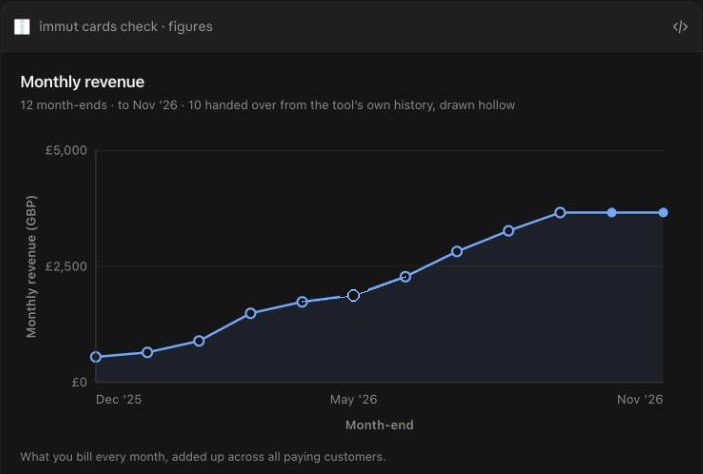
Every investor has different questions, and a pitch deck answers only the ones you guessed. immut is a Mac app that connects to the tools you already use. An investor you choose asks their own question in their AI, such as Claude, and gets the answer from today’s numbers. It is agent friendly: their AI connects through MCP.
- You choose which investors can ask, and you can stop it at any time
- Your customers are shown as labels, never by name
- Built to get investors replying and booking meetings with you
Free for your first 3 investors.
Questions founders ask
Do we tell the FCA when a seed investor takes a big stake?
If your firm is regulated by the FCA, a person may need to notify the FCA before they gain or increase control. Check the change in control rules before you close the round.
Source: FCA: Change in control
How long does it take to prepare answers to all these questions?
Most founders can draft them in a few focused days if their numbers live in their tools. Start with the questions your deck does not answer, then add proof as you go.
What if I do not have a number for a question yet?
Say so plainly, and say when you will have it. A clear gap with a date is a better answer than a guess, and investors notice guesses.
Should I send my numbers before the first meeting?
Send enough to earn the meeting, then share the detail once an investor is interested. Whatever you send, date every figure so it is clear how fresh it is.
Do UK investors ask different questions from other investors?
Most questions are the same everywhere. The differences are about local rules and money, which is why this guide has notes for founders raising in the UK at seed.